



I barely open my apps anymore.
My AI is connected to Notion, Google Drive, and my spreadsheets. Most days I ask it to check what’s there and come back with whatever needs my attention.
It’s also how I take in information now. When I research something, my AI goes out, gathers what’s there, and brings it back to me. Even the newsletters I subscribe to mostly reach me through it. I still choose which ones I follow, but my AI reads them first, summarizes them, and explains the parts worth my time.
It knows what I’m working on, so it works like a filter, and mostly the things that matter get back to me.
I think your clients and customers are heading the same way. Their AI will decide what reaches them, and that includes you. When they have a question you could answer, more of them will ask their AI first, and you’ll only hear about it if their AI decides you add something it couldn’t.
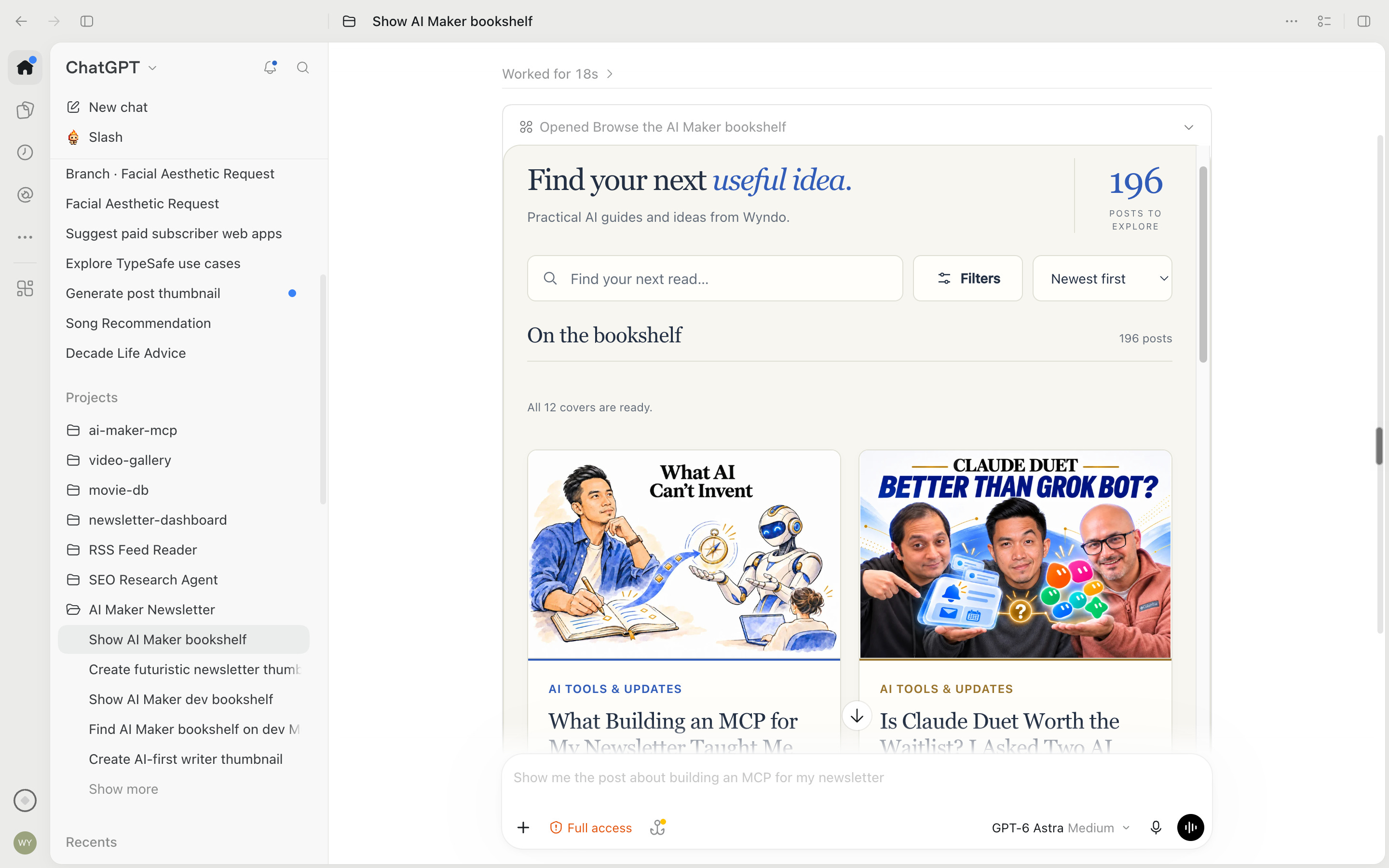
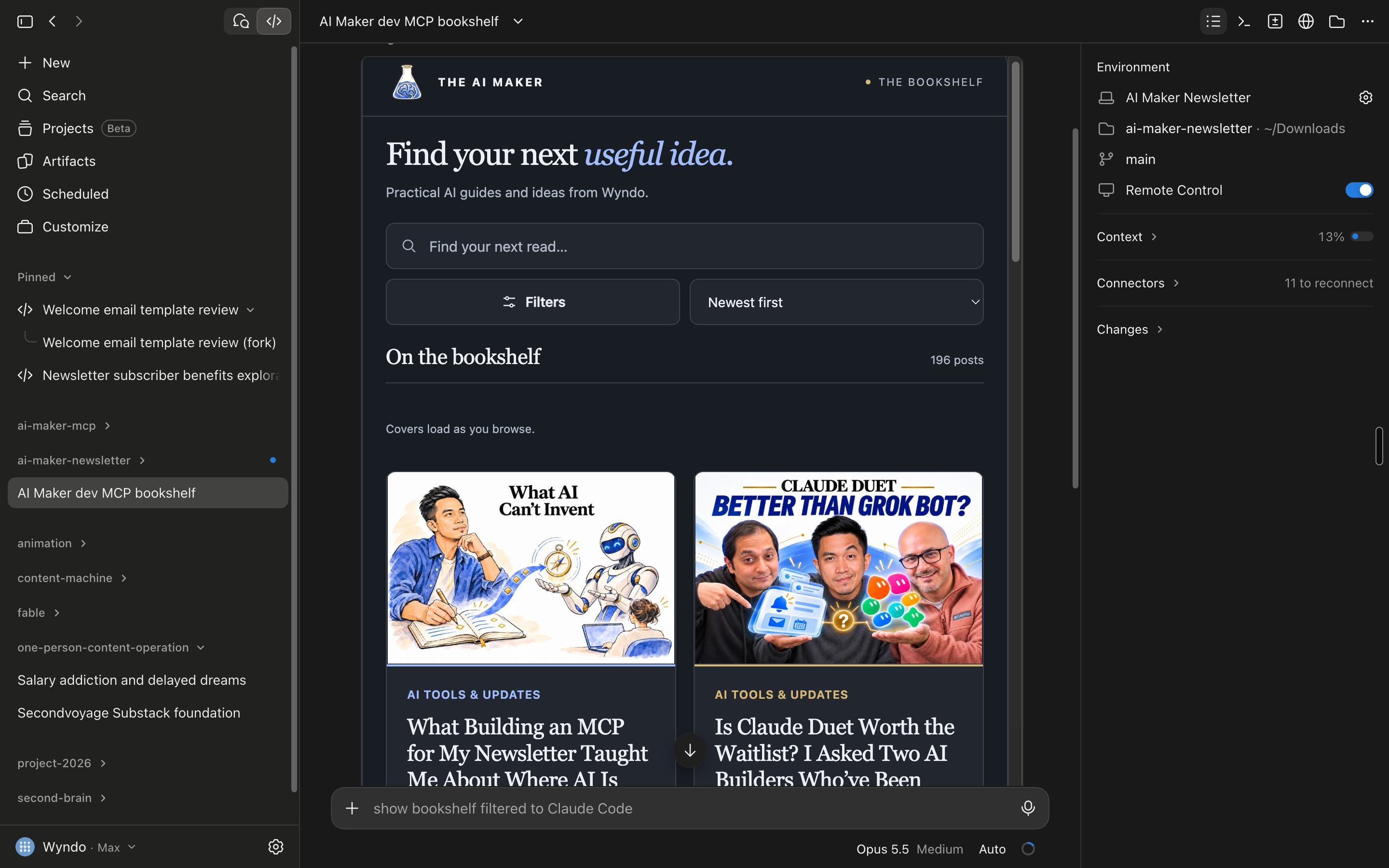
That’s why, I turned my newsletter, AI Maker, into an MCP. An MCP is a link someone adds to Claude or ChatGPT so their AI can reach your material and use it with them. My paid subscribers add it once, and from then on their AI can search nearly 200 of my posts, pull the right prompt, and run my AI skills on their own work.
Here’s what’s inside mine.
A reader’s AI can search nearly 200 of my posts, answer their question from them, and point to the post the answer came from. It can pull from more than 120 prompts and questions I’ve written to help people think through decisions, plans, and stuck problems with AI. And it can run 18 skills on their own work, from turning messy notes into content to preparing for the workday.
I give it to every paid subscriber. My readers already use AI every day, so I wanted everything I’ve made to show up inside the AI they already use, right when they’re in the middle of their own work. They add the link once, and from then on it’s there whenever they need it.
As of today, hundreds of them have used it. Here’s how it looks inside of ChatGPT and Claude:
In this post, I’ll share what building it taught me about where expertise is heading, four things your expertise can do inside someone else’s AI, five ways you could offer it, and one prompt to help you pick the way that fits you.
It’s also the topic of our next Mastermind session. On Nov 27th, Michael Simmons and I build the first version with you, live, from your own material.
People Will Ask Their AI Before They Ask You
Writers are already adjusting. Dan Shipper, who runs Every, said on Nathan Barry’s show that he barely looks at his inbox now because his AI assistant handles most of it. He also said his assistant has never once told him a newsletter came in that he’d like. Every now has its own MCP, and Dan wants to see whether readers will install it so their AI hears when a new article comes out.
Now think about what people come to you for. Maybe it’s a coaching program, a course, a consulting engagement, or the feedback clients trust you for. Their AI can already answer a lot of those questions by itself. So when it gets there first, it’s the one judging whether your take adds anything to what it would have said anyway. If it doesn’t, your potential clients and customers get a decent answer and never hears from you.
That leaves two questions about anything you offer:
Can their AI reach it and work with it? My answer for AI Maker was the MCP. Yours might start smaller: a page any AI can read, or a file a client adds to their own Claude or ChatGPT.
What’s in it that their AI couldn’t make on its own?
Dan’s version of the second question is how to write so that Claude thinks your piece is important. For my newsletter, the answer is what I’ve tested myself, what I decided after trying it, whether I think something is worth a reader’s time, and how my readers can apply it to their work.
When AI Writes the How-To, People Pay for Your Judgment
When people come to you for something, the usual way to help more than one of them at a time has been to write it down: a guide, an e-book, a template pack, a course.
Everything you write down holds two things. There’s the information: the steps, the definitions, the how-to anyone could look up. And there’s your judgment, usually spread through the pages in an aside, a story, or a “here’s what I’d skip.”
For years the two came bundled together.
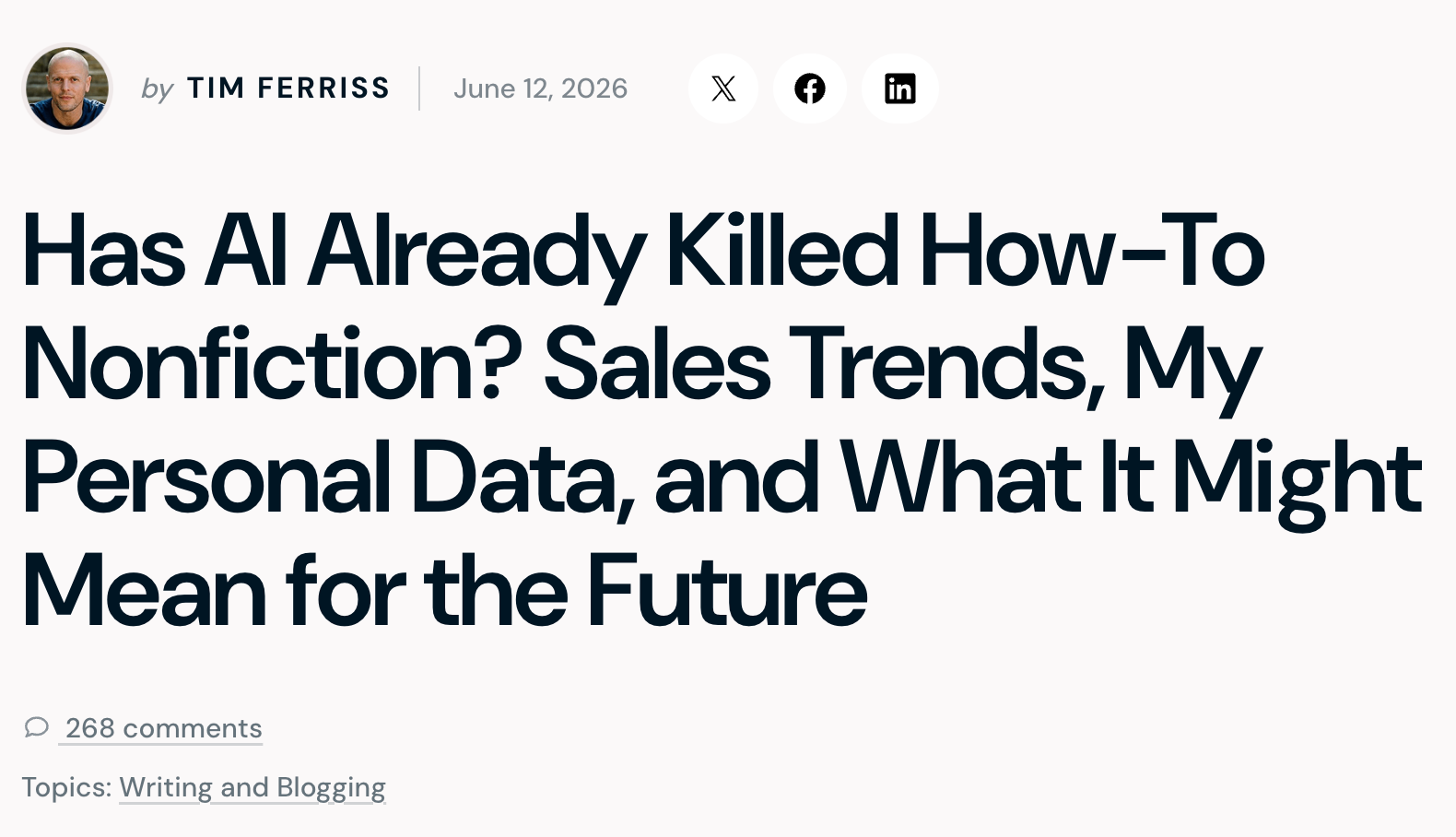
But the information part is already losing its price. Tim Ferriss shared his book numbers in June: US print sales of his how-to books fell 46% in 2025 and are on pace to drop another 57% this year. He describes his books as lookup tables, and says many readers now ask a chatbot that has read them and get a plan fitted to their own body and schedule in seconds.
What it can’t do is make the calls you haven’t written down. How you’d adjust when a client’s plan stalls, what you’ve learned from the people you’ve helped since, what you’d tell this person about their situation.


Alex Lieberman, who co-founded Morning Brew, asked Claude which businesses get stronger as AI gets cheaper, and one answer on its list was outcome data that isn’t on the internet, which models can’t train their way to. For an expert, that’s what you’ve seen work and fail with real clients and customers.
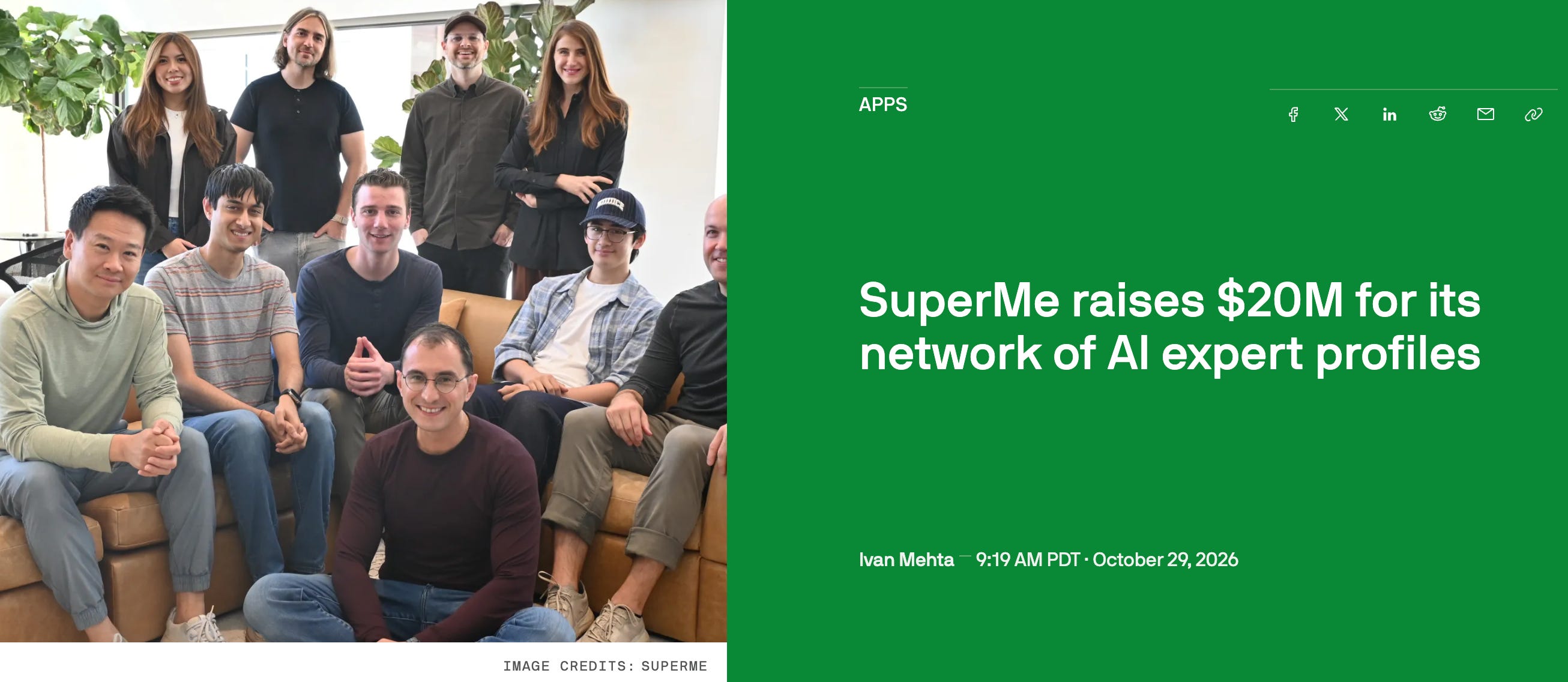
Startups are already betting money on it. SuperMe raised $20 million in late October for a network of AI profiles built from what experts know, which people can ask from inside Claude or ChatGPT.
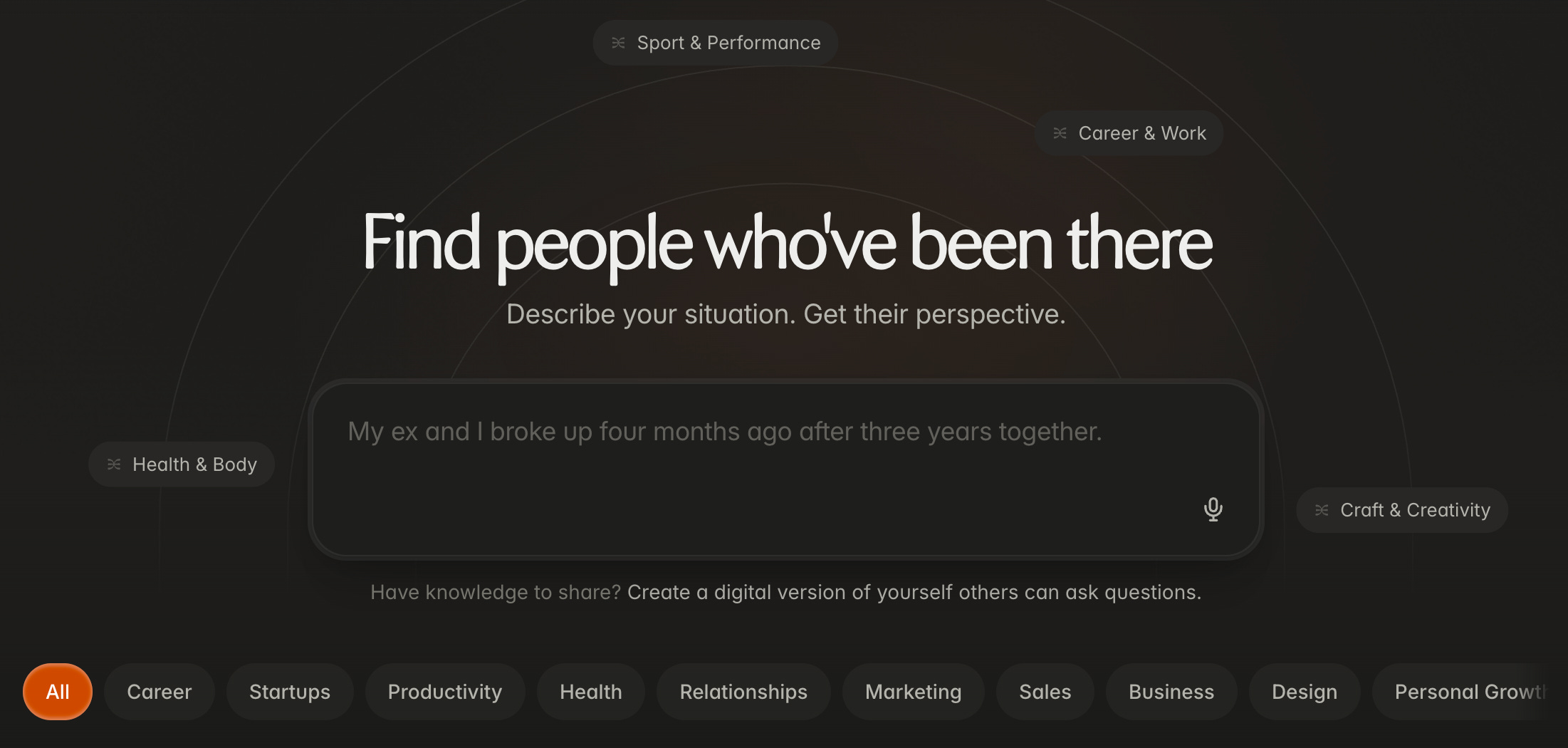
Delphi builds what it calls digital minds for everyone from startup founders to relationship coaches, and its pitch is that you can bring your own situation and ask, “what about me?”
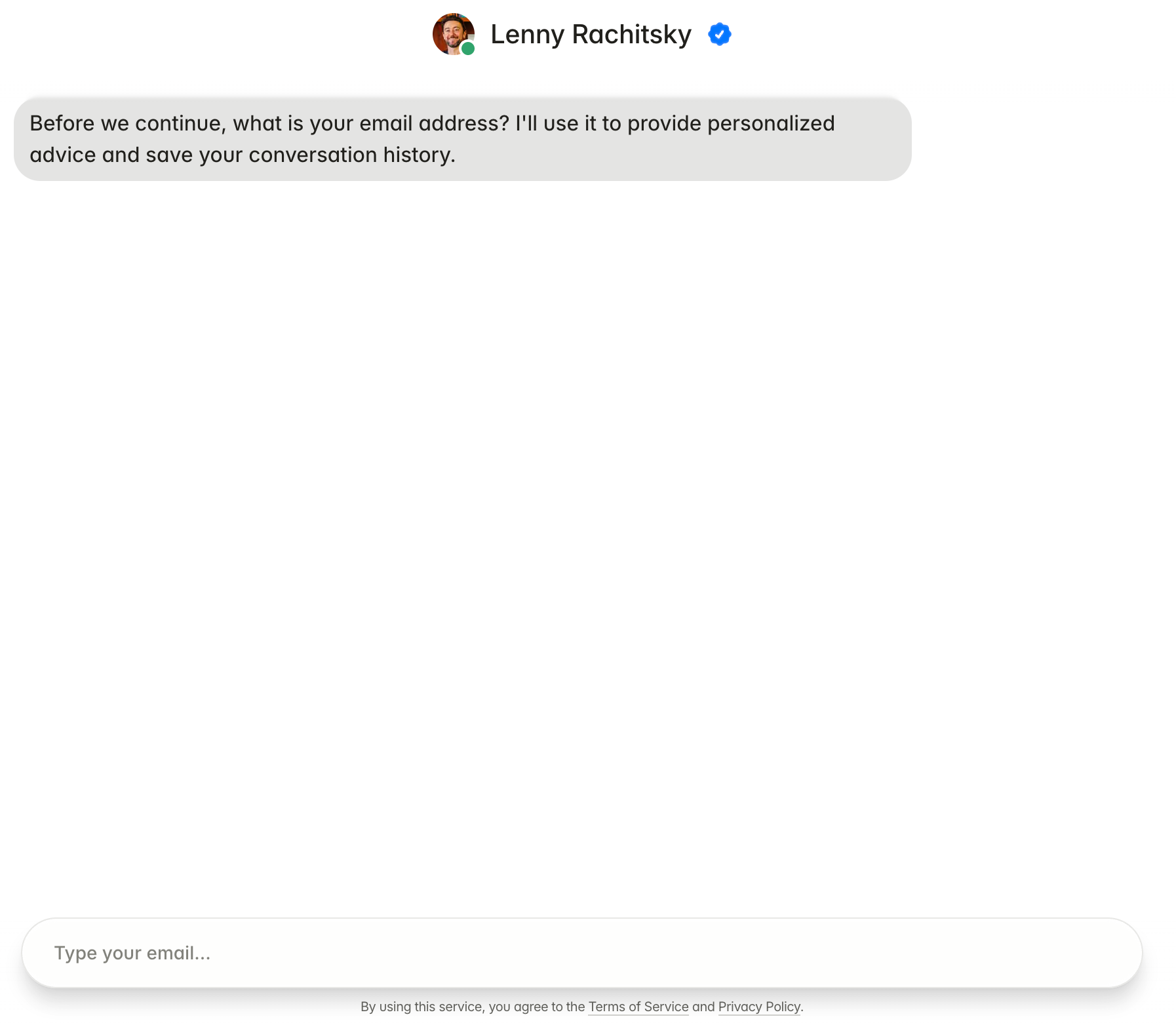
Additionally, Lenny Rachitsky who has built his own bot on Lennybot for his newsletter, which has over 1 million subscribers and is one of the biggest one-person newsletters. This bot allows his readers to ask him anything related to his knowledge of startups and product management.
So the move I’d make is to put your judgment where a customer or client’s AI can apply it to their own situation. I think that’s where selling expertise is heading: people paying for access to your judgment from inside their own AI.
4 Things Your Expertise Can Do Inside a Client or Customer’s AI
When I built the AI Maker MCP, everything I had sorted into two piles. Most of my posts are information with my judgment mixed in, so they went in as something a reader’s AI can search. My skills and prompts are mostly judgment. They hold how I’d actually do a job, so they went in as something a reader’s AI can run on their own work.
This is how I offer additional value to my readers.
Your material probably sorts the same way. Here’s what it can turn into.
1. Answer from your work. A client asks a question, and their AI answers from your posts, lessons, and notes, with a pointer to where you said it.
What you can do with it: stop answering the same five questions on every call. Let a new client catch up on your method before your first session together.
2. Walk them through your framework. If you have a named method or diagnostic, their AI takes their situation through your steps and questions, in your order.
What you can do with it: a business coach’s quarterly review, run on the client’s own numbers. A career coach’s story audit, run on a real CV.
3. Check their work against your standards. The feedback you’ve given clients becomes a checklist their AI applies before the work reaches you. My Sales Page Builder skill works this way: it holds the checks I’d run on a sales page, and the reader’s AI runs them on theirs.
What you can do with it: clients bring you their second draft instead of their first, so your review time goes to the problems only you can spot.
4. Point to the next step. You can share what you know with potential clients and customers too. Their AI answers from your material, and when a question gets specific to their own situation, it suggests the next step with you: a booking link, your program, or whichever of your offers fits.
What you can do with it: give prospects a free version they can ask before they ever talk to you. A general question gets a real answer from your work. A question about their own launch, team, or numbers gets your booking link or the offer that matches what they asked.
“Haven’t I just given it away?”
It’s a fair worry, but you can decide who has access to your “digital brain.” An MCP can ask for a sign-in, so only the clients or members you let in can use it, and Stripe has a guide for charging for one.
For my newsletter, AI Maker, the MCP is part of the paid membership.
5 Ways to Offer What You Know Through Someone’s AI
To get this started in your work, you don’t need an MCP on day one. Some of it can start as a single skill:
1. An AI skill people buy once. A career coach turns their CV read into a skill: which stories to cut for someone moving from teaching into product management, and what hiring managers in that field tend to push back on. Someone pays once, adds it to their own AI, and runs it against the exact job they want. It’s the closest thing to the old e-book.
2. A digital brain people subscribe to. A nutrition coach puts their notes, the patterns they’ve seen across clients (with personal details stripped out), and the adjustments they make into something people can ask any time. Someone asks, “I’m traveling for two weeks, what do I change?” and gets the answer the coach would give. People pay monthly, and the answers improve as the coach works with more people.
3. A premium tier for clients you already have. A consultant gives current clients their first-week diagnostic as something they keep after the engagement ends, as an add-on to the retainer. The client’s team checks each new quarter’s numbers against how the consultant would read them, and calls when something looks off.
4. A free version that brings in clients. The same consultant offers a short version of that diagnostic for free. A prospect’s AI runs it on their own numbers, and the ones who see what the consultant would catch are the ones who trust them enough to book a call.
5. Part of a membership or course. If you run a paid community or teach a course, your skills can come with it, the way the AI Maker MCP comes with my paid tier. A course teacher adds a feedback skill that gives students a first round on their work in the teacher’s way, so live time goes to the harder calls.
If you already have paying clients or customers, I’d start with 3 or 5. You know exactly who would use it, so you can test it on their real questions this month instead of waiting to find buyers.
Find the One That Fits You
Your AI can help you pick in one prompt. Fill in the brackets and paste it into Claude or ChatGPT:
“I’m [what you do]. People usually come to me for [the thing they ask you for], and right now I help them through [calls, a program, a course, a community]. Tell me which parts of that you could already give them without me, and which depend on calls I make about their own situation. Then pick the one way to offer those calls through someone’s AI that fits me best: a skill they buy once, a subscription, a premium tier for clients I already have, a free version that brings in clients, or part of a membership or course. Tell me what the first version would be this month. Then argue against your pick.”
If the answer feels generic, tell it about a real client or a call you made last week, with names removed, and ask again.
Build the First Version With Us on Nov 27th
On Nov 27th, 11AM ET, Michael and I are running our third Mastermind session: three hours, live on Zoom, for people who already use AI and want to earn from what they know.
You bring your own material: frameworks, course outlines, feedback you’ve written to clients, past posts. We start with a longer version of the exercise above, so you know what you’re building and who it’s for. Then we build a first version your clients and customers can add to Claude or any AI, and you test it on the questions they’d really ask.
We’ll share more details with you soon.
Stay tuned!
Best,
Wyndo